
Back to Portfolio
AI/ML

ML Image Recognition Model

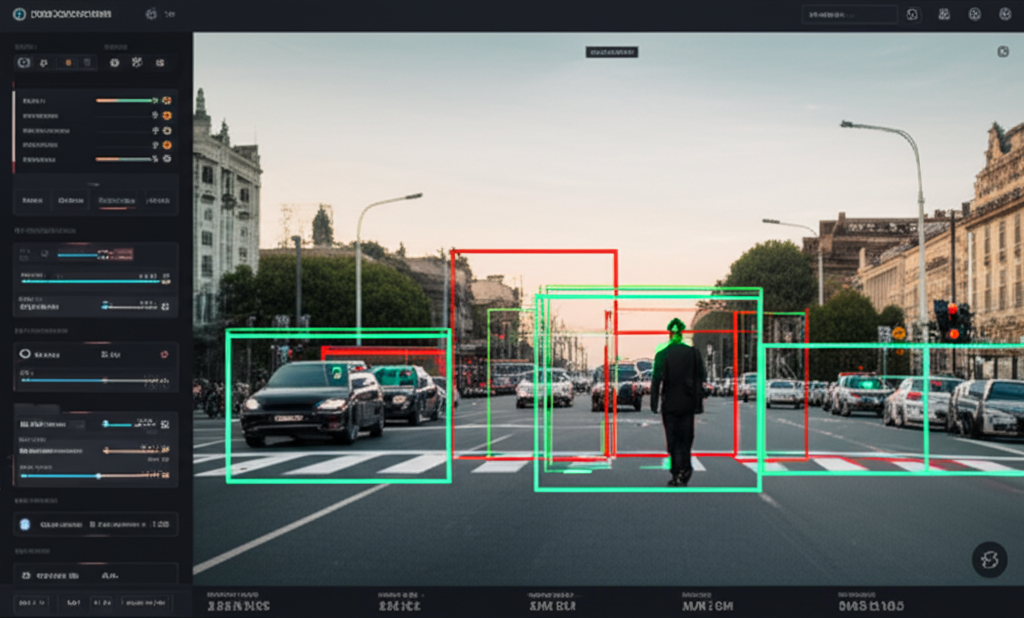
Advanced computer vision system for object detection, classification, and real-time image analysis.

PythonOpenCVTensorFlowCNNYOLO
ML Image Recognition Model

Technical Overview

How the solution is organized and why the structure matters.

Advanced computer vision system for object detection, classification, and real-time image analysis. The technical blueprint separates responsibilities into clear layers so the solution can be tested, explained, extended, and handed over confidently.

System Architecture

Four clear layers keep responsibilities understandable and maintainable.

01

Data and validation layer

Collects structured inputs, validates quality, and prepares consistent features for training or inference.

02

Model pipeline

Separates preprocessing, model execution, evaluation, and versioned experiment artifacts.

03

Application and API layer

Exposes predictions through a controlled service boundary that the interface can consume safely.

04

Evaluation and monitoring

Tracks accuracy, failure cases, latency, drift indicators, and reproducibility across model versions.

Technology Stack

The practical role of each technology in this project.

Python

Core implementation language for analysis, automation, services, and models.

OpenCV

Image processing, camera input handling, and computer-vision utilities.

TensorFlow

Training and serving framework for deep-learning models.

CNN

Visual feature extraction and image-classification architecture.

YOLO

Real-time object detection with bounding boxes and confidence scores.

Implementation Workflow

A reviewable path from requirements to tested handover.

01

Requirements and constraints

Confirm users, inputs, outputs, acceptance criteria, platform limits, and delivery scope.

02

Architecture and prototype

Validate the highest-risk technical decisions with a small working baseline before full implementation.

03

Implementation and integration

Build in reviewable modules, connect the selected technologies, and document key decisions.

04

Verification and handover

Test expected and failure paths, review outcomes, and prepare technical documentation and guidance.